Field-proven projects across landfill, mining, water & chemical sectors
Selected ELL surveys, permanent monitoring deployments, environmental assessments and site characterisations delivered for owners and EPCs.
 Leak Detection
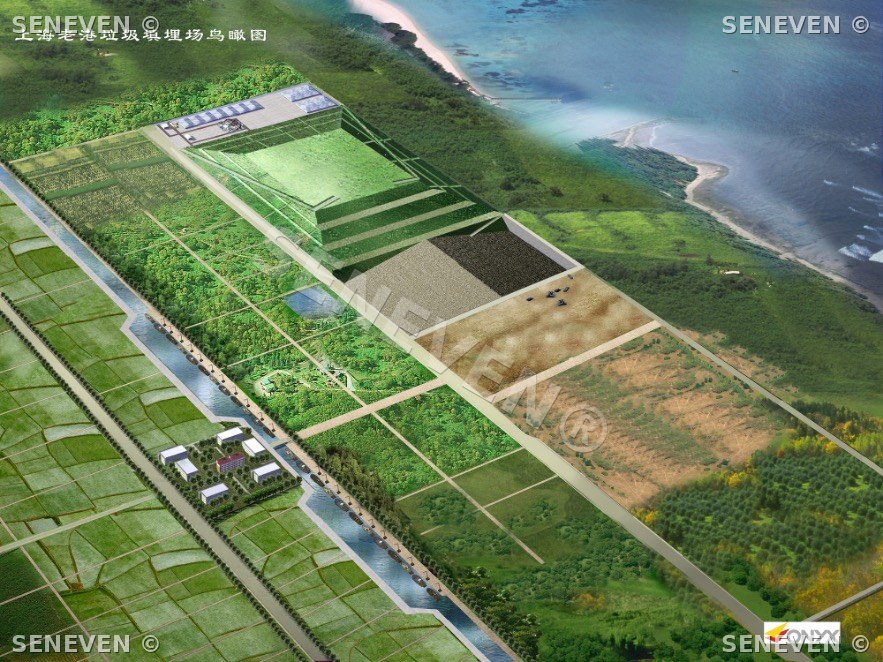
Shanghai Landfill Leak Detection
Project Overview The Laogang Solid Waste Comprehensive Utilization Base sits in Pudong, Shanghai — about 70 km from the city centre — covering a planned area of 29.5 km² (15.3 km² built, 14.2 km² controlled). As the core terminal disposal site for Shanghai's municipal solid waste, Laogang handles roughly 70% of the city's MSW. In-service capacity: 12,900 t/d (landfill 9,900 t/d, incineration 3,000 t/d). Under construction: 11,000 t/d (landfill 5,000 t/d, incineration 6,000 t/d). Inspection Scope SENEVEN was contracted for geomembrane leak detection on Phases IV and V of the Shanghai MSW Landfill, covering: · the MSW landfill cells; · the fly-ash landfill cell; · the sludge landfill cell. Given the long project span, our team made multiple site mobilizations to perform initial inspection and re-testing, ensuring liner integrity through both construction and operation. Technical Highlights & Results During Phase IV, the owner organized a blind-hole comparison test between SENEVEN and a US detection firm to validate detection reliability. SENEVEN's results were more accurate and won the assessment. Every defect identified during inspection was promptly repaired, significantly reducing the risk of leachate contamination of surrounding groundwater. Outcomes Specialized leak detection and timely repair markedly improved the operational safety of the Phase IV / V liner systems, providing reliable assurance for long-term stable operation of one of the world's largest integrated MSW disposal bases.
 Groundwater Survey
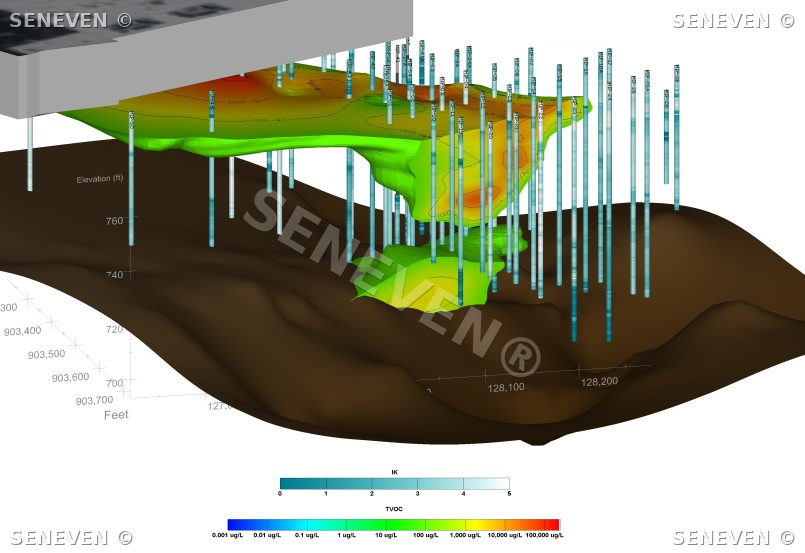
Groundwater Survey & Risk Assessment
A high-precision, long-duration monitoring campaign mapped the dynamic behaviour of a contaminant plume — supporting plume migration simulations and a containment strategy centred on source reduction and monitored natural attenuation. Project Overview A detailed groundwater contamination survey was carried out around a landfill site and its immediate surroundings, combining high-density borehole sampling, dynamic water-level monitoring, and multi-parameter water-quality analysis to precisely delineate the spatial extent and migration patterns of the contaminant plume. Methodology · High-resolution sampling — multi-level monitoring wells along site boundaries and downstream, with micro-pump depth-discrete sampling capturing groundwater across distinct aquifers. · Dynamic plume monitoring — a long-term water-level and water-quality network with high-frequency sampling captured seasonal and interannual plume variation. · Quantitative environmental risk assessment — standard health-risk models were applied to contaminant concentration data, quantifying human-health risks across exposure pathways. · Containment plan — based on contamination characteristics and quantitative risk results, a strategy emphasizing source reduction and monitored natural attenuation was proposed, with explicit monitoring indicators and frequencies defined.
 Long-term Monitoring
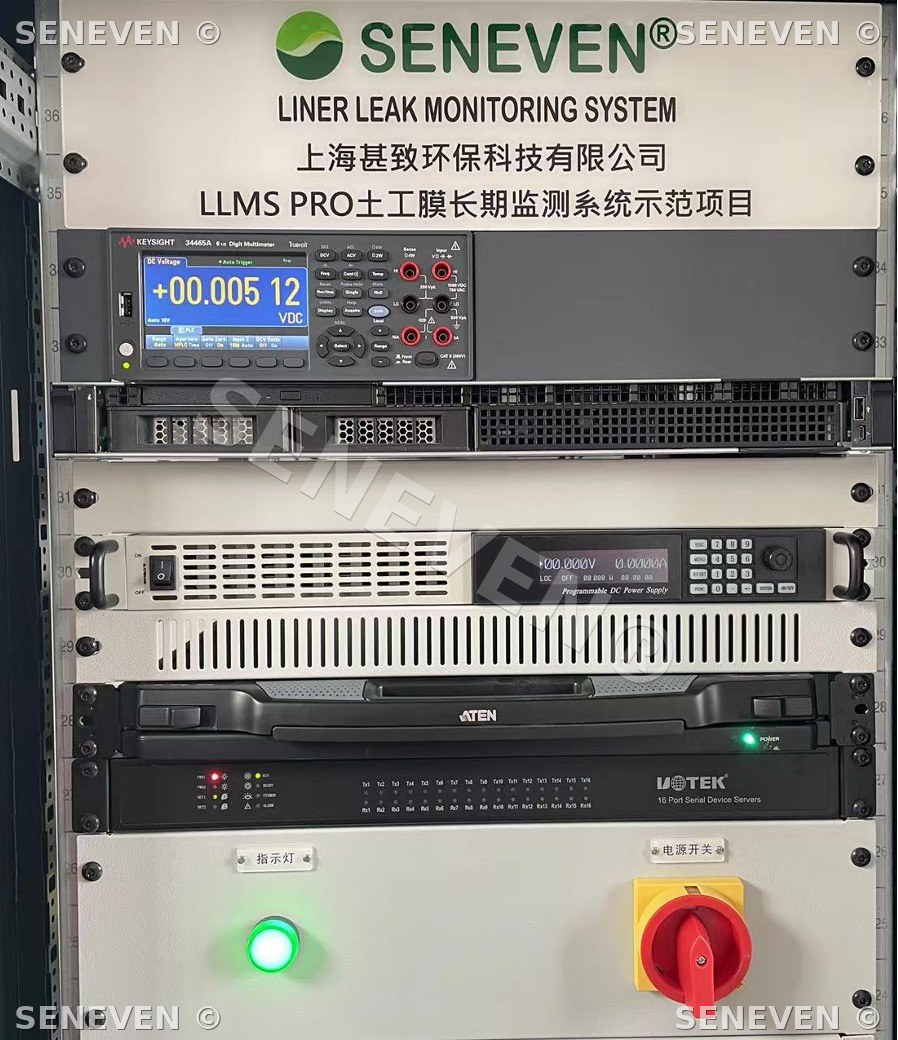
Long-term Monitoring Research Demonstration
Test-Bed Construction This R&D test-bed was built to support leak-monitoring technology with controlled experimental data, with the following objectives: · Conductive geotextile characterization — how surface resistance of conductive geotextiles affects monitoring data acquisition and defect-detection sensitivity. · Material conductivity — how the conductive properties of materials above and below the geomembrane influence defect-detection sensitivity. · Optimal electrode layout — how electrode spacing affects defect detection. · Algorithm refinement — analysis and inversion of real-world potential distributions to derive better defect-localization algorithms. Test-Bed Specifications · Total footprint: 880 m²; · Site dimensions: 18.3 m wide × 38.8 m long; · Monitored area: 17 m × 34 m; · Electrode grid: 1 m spacing; · Liner: double-layer containment; · Monitoring sensors deployed; full layout and construction photo records. Significance By emulating real landfill / impoundment liner-and-leak scenarios, the test-bed delivers a scientific foundation and experimental platform for: defect-detection sensitivity, electrode-layout optimization, localization-algorithm refinement, and long-term reliability validation of online monitoring systems. Test-Bed Results After commissioning, deliberate puncture testing validated system accuracy and sensitivity: · 1 m grid — every defect detected; max localization error 19 cm; min 2 cm. · 2 m grid — every defect detected; max error 70 cm; min 3 cm. · 3 m grid — only some defects detected (2 of N); max error 1.2 m; min 30 cm. · 4 m grid — only some defects detected (2 of N); max error 2.3 m; min 10 cm. Synthesis At 1–2 m spacing the system reliably detects all defects with localization error within an acceptable range. Beyond 3 m, some defects go undetected and localization error grows sharply. 1–2 m grid spacing is therefore the optimal trade-off between accuracy and engineering economics.
 Heap Investigation
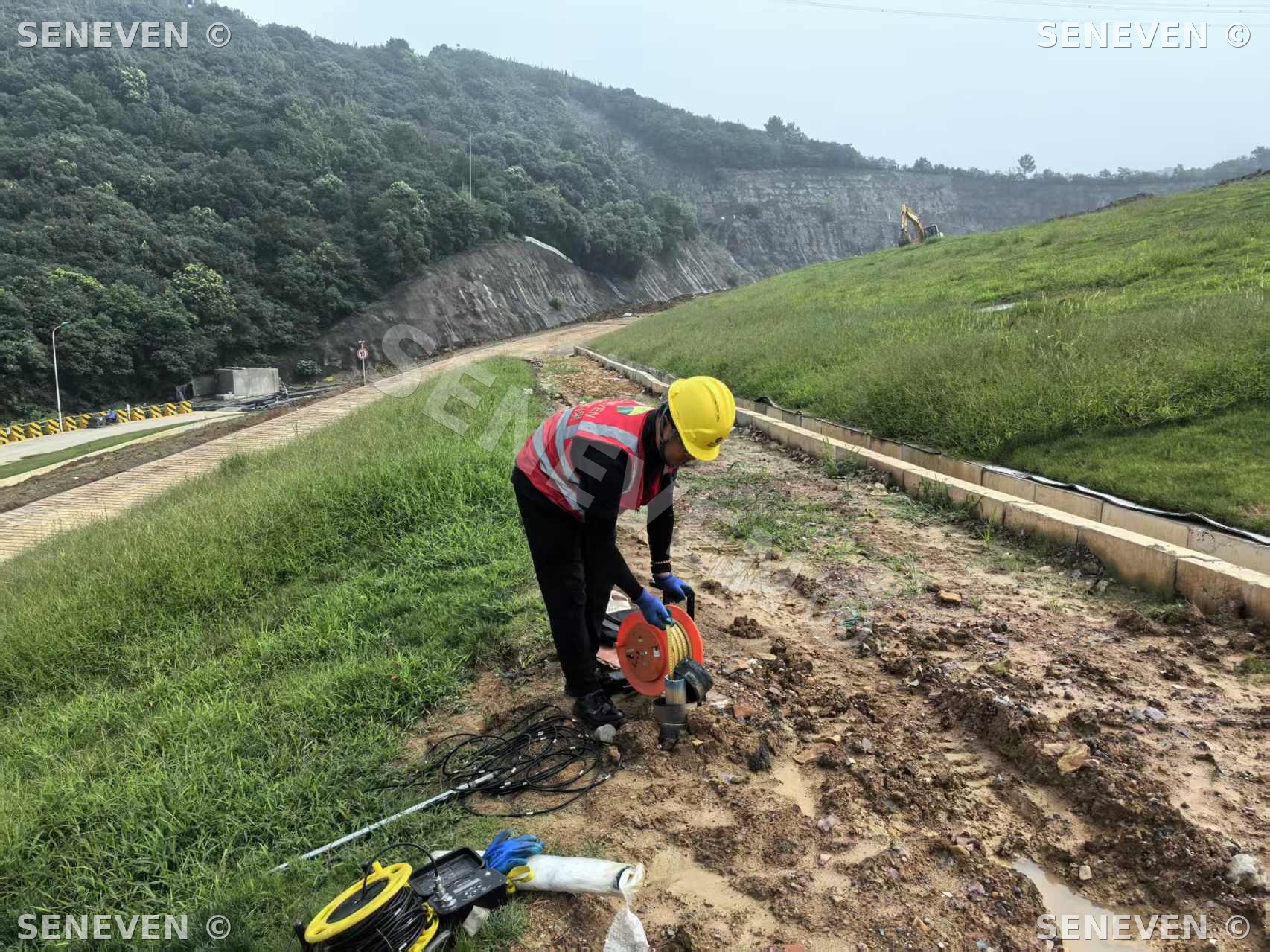
Waste Heap Assessment
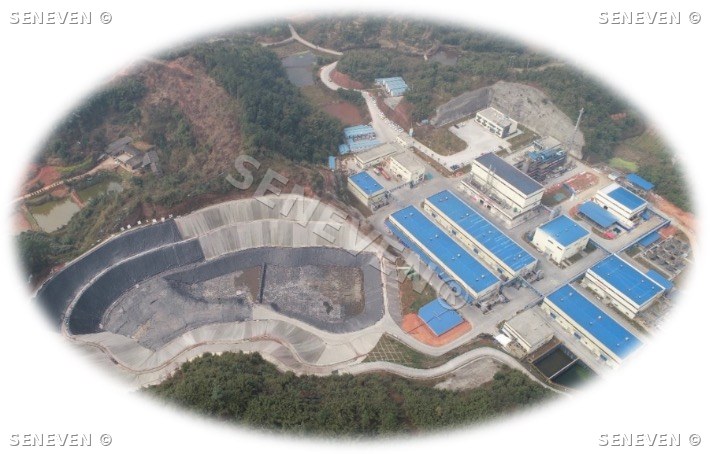
Project Overview After many years of operation, settlement of this landfill body had largely stabilized. To gain a comprehensive understanding of internal state, a systematic geological survey and assessment was carried out — covering leachate-level distribution, drainage-system performance, landfill-gas yield, and slope stability. Investigation Scope · Leachate level & drainage — multiple monitoring wells across the waste body track leachate levels with ultrasonic loggers; drainage piping was inspected for blocked or failed segments. · Stratigraphic profiling — exploratory boreholes plus geophysical surveys delineated waste stratigraphy, composition, and compaction across distinct zones. · Landfill-gas evaluation — pump-out tests and gas monitoring quantified generation rates and distribution, supporting decisions on gas utilization or controlled disposal. · Slope stability — geological survey combined with numerical simulation evaluated slope stability and produced risk-control recommendations. Outcomes The assessment report provided complete baseline data for closure-phase design and leachate-system retrofit, guided targeted repair of drainage facilities, and underpinned long-term operational safety of the landfill.
 Safety Assessment
Environmental Safety Assessment
Project Overview This East-China hazardous-waste landfill — total cell area ~80,000 m², built on a double-HDPE composite liner — has been operating for more than 15 years. As service life accumulates, integrity of the liner system and overall environmental safety drew increasing attention, requiring a systematic safety performance assessment. Assessment Scope SENEVEN deployed advanced electrical leak detection and environmental monitoring techniques to deliver a comprehensive safety assessment, covering: · Liner integrity — full-coverage Electrical Liner Membrane Detection (ELMD) of the basal liner system, precisely identifying any leak points. · Leachate water-quality analysis — multi-parameter testing of leachate samples to evaluate generation rates and compositional change. · Groundwater monitoring — comprehensive sampling across surrounding monitoring wells to assess any leakage influence on groundwater. · Landfill-gas distribution — systematic surveys to map gas-migration behaviour across the site. Conclusions The combined evidence formed a complete safety performance report, providing a scientific basis for safe operation, risk control, and any subsequent remediation decisions. Findings showed the liner system was largely intact, with localized minor anomalies — for which targeted repair and enhanced monitoring were recommended.
 Long-term Monitoring
Hubei Fly Ash Landfill Monitoring
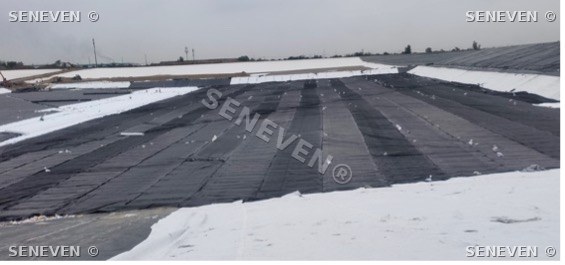
Project Overview Type — fly-ash landfill cell, flexible containment. Liner — double-layer HDPE structure. Online monitoring area — 57,154.0 m². Monitoring System Layout · Electrode grid spacing: 6 m × 6 m; · Monitoring electrodes: 1,565 in total; · Powering electrodes: 52 above and 52 below the liner. Detection & Verification After commissioning, a deliberate-puncture verification was used to validate system effectiveness: · The system captured anomalous data and raised a leak alert; · Using the leak coordinates returned by the system, a controlled excavation was performed at the indicated location; · The corresponding defect was successfully located. Outcomes & Significance · Validated long-term effectiveness and pinpoint accuracy of the online monitoring system; · Demonstrated a closed loop spanning data acquisition → coordinate localization → on-site excavation verification; · Provides reliable assurance for fly-ash cell operations and downstream groundwater protection.
 Leak Detection
Inner Mongolia Heap Leach Detection
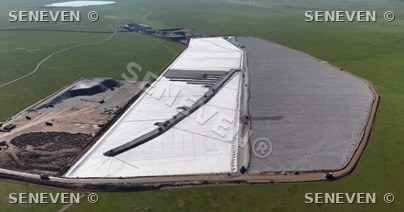
Project Overview The base-lining works for this project total 525,339.62 m², comprising: · Heap-leach pad: 494,127.95 m²; · Intermediate-solution pond: 7,298.18 m²; · Pregnant-solution pond: 7,727.01 m²; · Phase-I emergency pond: 16,186.48 m². This inspection covered the pregnant-, intermediate- and emergency-solution ponds — a total of 62,423.34 m². Liner Structure All ponds use a double-composite liner system. From bottom up: · compacted natural soil; · ≥300 mm permeable rock layer; · geocomposite drainage net; · 300 mm compacted gravel-soil; · GCL sodium-bentonite waterproof blanket; · 1.5 mm HDPE geomembrane; · geocomposite drainage net; · 2.0 mm HDPE geomembrane; · geocomposite drainage net; · 1.0 m gravel ballast layer. Methods · Lower HDPE — arc-method inspection for surface defects; · Upper HDPE — after gravel placement, dual-electrode method for overall integrity. Results · Construction quality was rigorously controlled; · Every defect identified was promptly repaired by the contractor; · Post-handover the facility has operated normally with no leakage or anomalies. Significance A representative case for double-liner inspection of non-ferrous heap-leach facilities: · Validated the combined arc + dual-electrode workflow for large-area pond systems; · Effectively safeguarded operational safety of pregnant-, intermediate- and emergency-solution ponds; · Provided robust engineering support for environmental risk control in mining-waste reuse.
 Leak Detection
Hunan Vertical Barrier Detection
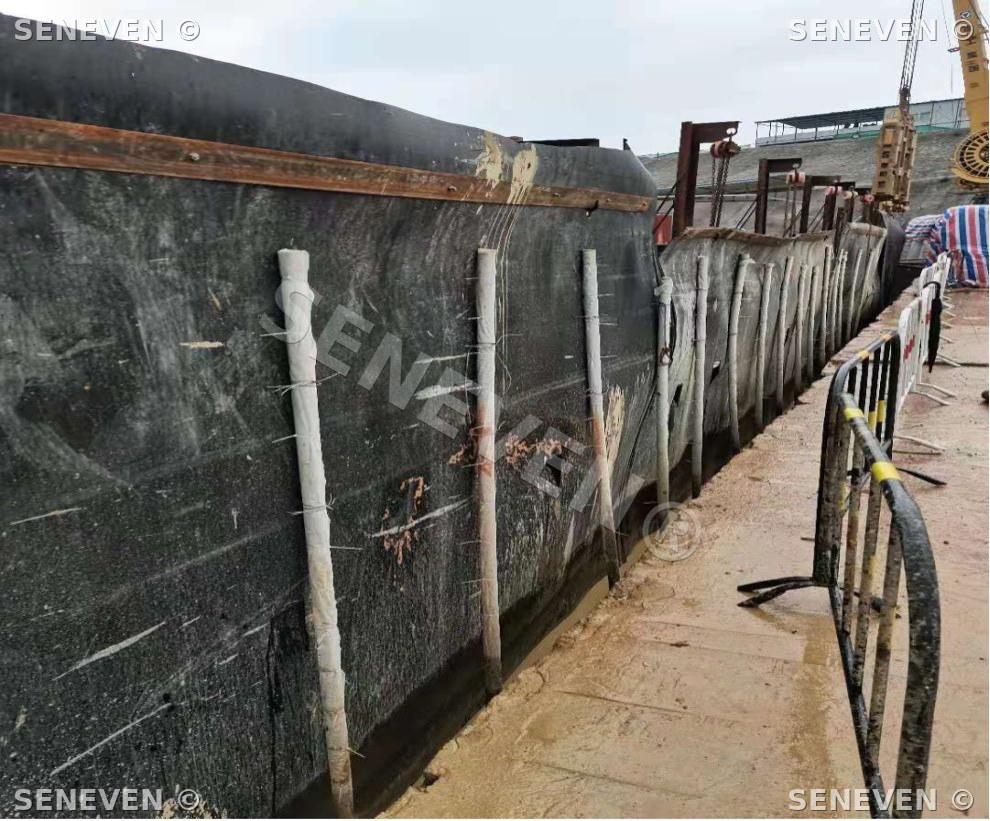
Project Overview Located on the western bank of the Xiang River, this ~17-hectare (255 mu) site is a representative heavy-metal contamination remediation project. To control chromate migration, an enclosed flexible vertical HDPE cut-off barrier was constructed around the contaminated zone: · Barrier length around the contaminated area: 1,581.2 m; · Around the detoxified chromium-slag pile: 667.0 m; · 3.0 mm HDPE membrane, with clay backfill on one side; · Top of barrier flush with grade; toe embedded ≥2.0 m into moderately weathered slate; · Average burial depth: 35–45 m. Inspection Scope & Methods End-to-end QA was performed to ensure construction quality and long-term operational safety: · Embedment depth — measured with a dedicated probe to verify design compliance; · Lap-seam continuity — dual-electrode tests on lap joints after panel insertion; · Overall integrity — dual-electrode survey of the full vertical barrier after backfill; · Pre-installation defect screening — arc-method inspection of geomembrane surfaces for pinholes and scratches. Results · Inspection identified some membrane imperfections and embedment-depth shortfalls; · The contractor repaired and adjusted defects per the inspection findings; · Post-commissioning, periodic high-density resistivity surveys outside the barrier showed no signs of contaminant migration — confirming sound long-term performance. Significance A representative in-situ containment case for heavy-metal contaminated sites. End-to-end leak/defect inspection during construction plus operational monitoring: · Secured the construction quality of the cut-off system; · Significantly reduced groundwater contamination risk; · Provides a transferable technical pathway and lessons learned for similar non-ferrous metallurgical remediation projects.
 Leak Detection
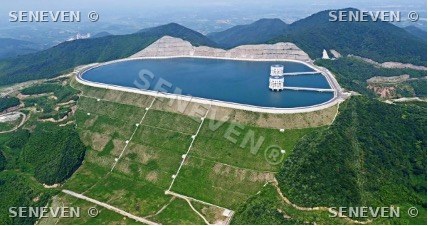
Pumped Storage Plant Upper Reservoir Leak Detection
Project Overview Upper reservoirs of pumped-storage plants rely on full-basin geomembrane liners and operate under high head and large drawdown cycles. Even minor liner defects threaten slope stability and directly degrade dispatchable capacity and round-trip efficiency. SENEVEN delivered full-coverage electrical leak detection on a major upper reservoir between liner placement and overburden installation, scanning over 120,000 m². Field Constraints A steep 1:1.75 bank slope, an extensive lined footprint and dense seam patterns combined with a critical-path construction window — defects had to be located and repaired without delaying subsequent works. Method During the exposed-liner phase, the entire basin was scanned with the arc-test method (ASTM D7953) to flag pinholes and seam defects at the millimetre scale; steep transitions were augmented with the dual-electrode method. Every flag was handed to the contractor with georeferenced coordinates and on-site marking for immediate repair. Outcomes Full-coverage scan of 120,000+ m² with every flagged defect repaired on site; post-repair re-test confirmed liner integrity meets CQA acceptance criteria. The case provides an electrical evidence chain for long-term safe full-pool operation and dispatchable capacity, and establishes a replicable construction-phase QA template for similar pumped-storage upper reservoirs.
 Leak Detection
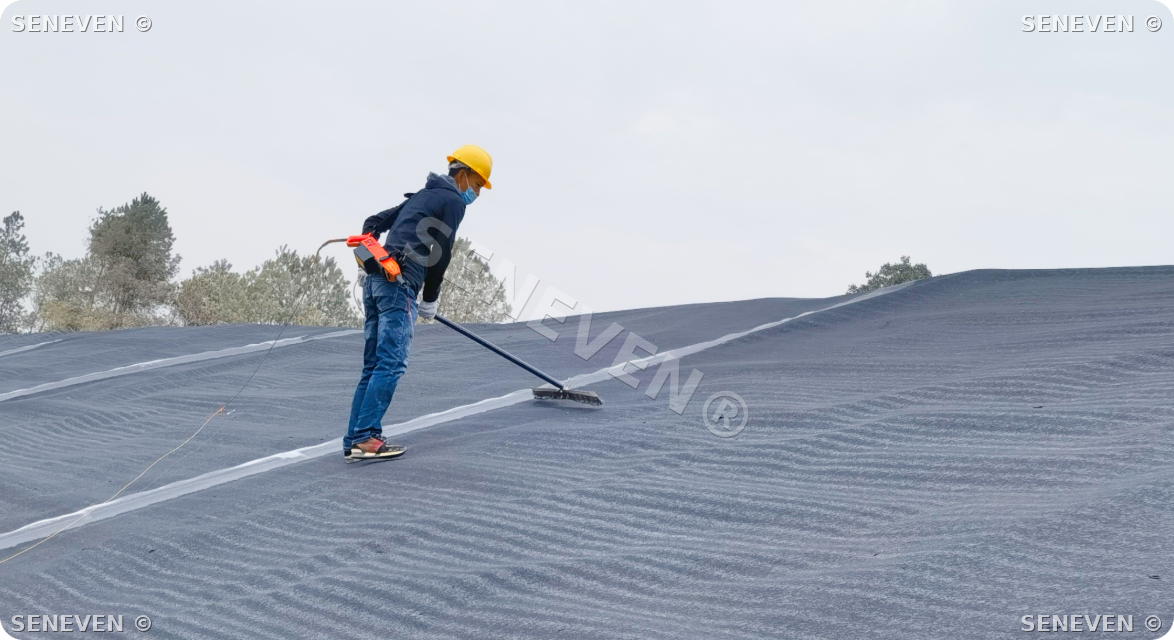
Xinjiang Large Reservoir Leak Detection
Project Overview Water-conservancy infrastructure across Xinjiang serves critical agricultural irrigation and ecological recharge missions, yet faces extreme diurnal and seasonal temperature swings, intense UV exposure and frequent wind-blown abrasion — a severe test for any geomembrane lining system. SENEVEN delivered systematic electrical leak detection across two construction phases on a major flatland reservoir, scanning over 180,000 m² to safeguard water-supply integrity. Field Constraints On a Gobi-fringe site, > 50 °C diurnal temperature swings drove liner thermal cycling, while wind-blown abrasion and construction-vehicle traffic introduced a mix of pinhole, mechanical and seam-failure defect types. Uneven gravel-cover thickness further required dynamic tuning of dual-electrode response parameters by zone. Method During the exposed-liner phase, the full main liner was scanned with arc-testing to flag welding and mechanical defects. After overburden placement, the dual-electrode method (ASTM D7007) was deployed on a zoned grid for overall integrity verification, with electrode spacing and excitation voltage tuned by gravel-cover thickness. Every flag was delivered as a GIS-coordinated report enabling targeted repair by the owner. Outcomes Identified 23 defects across three classes — pinholes, mechanical damage and seam failures — all located and repaired before overburden completion, eliminating rework excavation costs. The case provides an engineering reference for large-reservoir liner QA in arid, high-evaporation NW China, and the inspection report was incorporated into the water-authority commissioning archive.