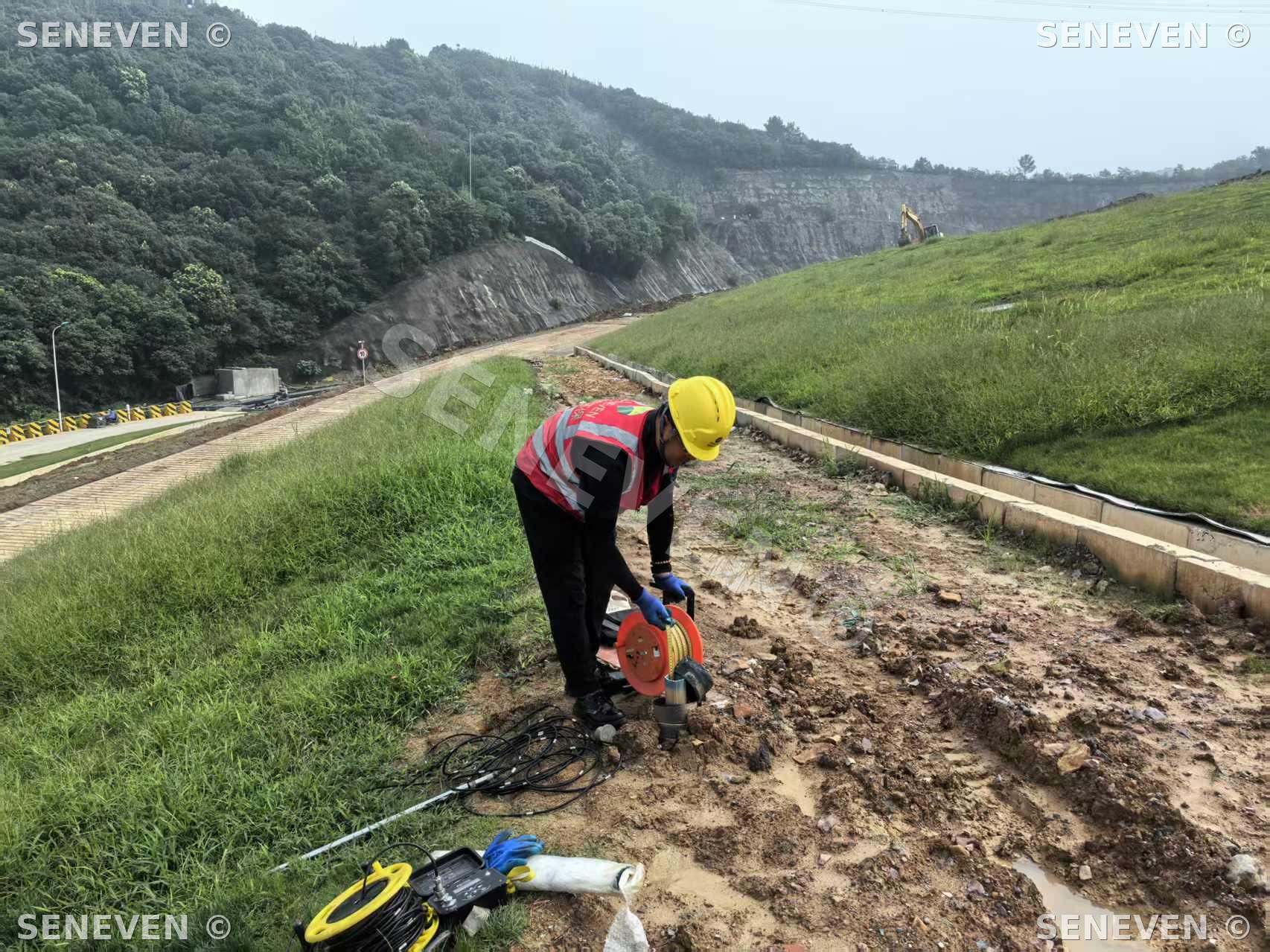
Waste Heap Investigation & Assessment
Systematic geological investigation and environmental assessment of various waste heaps.
Engineering Background
The waste heap is the central facility of a landfill—simultaneously receiving waste, providing containment, draining leachate, and controlling contaminants. Heap investigation and assessment determine leachate head levels, heap stability, gas generation, and liner integrity—providing a scientific basis for environmental management and risk control. Governing standards: GB 16889-2024 Pollution Control for MSW Landfills, CJJ 176-2012 Technical Code for Geotechnical Engineering of Sanitary MSW Landfills, and GB 51220-2017 Technical Code for Landfill Closure.
- Engineering geology investigation and unfavorable-zone identification
- Waste inventory and degradation stabilization assessment
- Leachate and landfill-gas generation surveys
- Heap settlement and stability monitoring
- Containment liner integrity inspection (CCTV + tracer)
- Integrated surface-water, leachate and gas management review
- Heap environmental safety assessment reports
Principle & Method
Scope includes: engineering geology (site investigation, identification of unfavorable zones and latent risks); heap status (waste inventory and degradation stabilization, leachate and gas generation, settlement and stability monitoring); containment liner (construction quality, operational condition, integrity inspection via CCTV and tracer surveys); water and gas management (surface drainage, leachate drainage and treatment, landfill-gas collection, utilization and management). The integrated workflow yields a complete picture of the environmental safety and operational state of the waste heap—supporting downstream management, remediation and pollution control.
Typical Scenarios & Diagrams
Need technical support?
Contact the SENEVEN engineering team for a tailored detection or monitoring scope, scaled to your project type, footprint and field conditions.